
Start a Candler County Property Search
The fastest entry point is the Candler Board of Assessors page on qPublic. One lookup there returns a parcel card with the owner-of-record snapshot, sales history, legal description, map, and value fields. An address works best for a single tract. An owner name may pull up several parcels at once, and a parcel number sidesteps spelling and road-name trouble. Because the live form's controls vary, read them on screen rather than copying another county's layout.
Treat the parcel card as a starting record. The recorded deed controls the transfer language. A licensed surveyor settles boundary questions. Tax records answer what was billed, paid, or sent to collection. Keep the parcel number, situs address, owner date, deed book and page, and tax year side by side, so gaps between systems can be explained instead of papered over.
- Search qPublic by the Candler County address, owner, or parcel identifier and save the exact parcel number.
- Run the owner through the GSCCCA name index, then open the latest deed by book and page.
- Check the Tax Commissioner portal for the matching account, bill year, payment status, and any collection notice.
- Use the qPublic map and recorded plat together; treat drawn parcel lines as reference graphics, not a survey.
- Ask the proper custodian for an existing record when a portal is blocked, incomplete, or too recent to show the filing.
Where Candler County Keeps Records
Three offices in Metter split the core Candler County property records. The Clerk of Superior Court records deeds, plats, liens, and releases. The Board of Assessors fixes the January 1 snapshot and keeps parcel facts and values. The Tax Commissioner issues the bill and takes the payments. The same owner name or value can appear on more than one site. The overlap does not make the records interchangeable. Need a certified copy, a correction, or current status? Call the office that created the record.
Candler Clerk of Superior Court
35 SW Broad Street
Metter, GA 30439
912-685-5257
GSCCCA Indexes Candler Deeds
The Georgia Superior Court Clerks' Cooperative Authority opens several doors into Candler County's recorded land files. A name search lets you set party type, instrument type, county, and neighboring counties. You can also pick surname or business name, date range, and display options. Book-and-page search moves faster when a parcel card or prior deed hands you the citation. The property search adds land-lot, district, subdivision, lot, block, unit, and cross-index fields.
Indexing is complete for transactions from January 1, 1999. Material from 1993 through 1998 is still being added. A wider global date range on the name page is not proof of Candler-specific coverage. For an older or missing instrument, ask the Clerk about the deed book. Also ask about the reverse index, plat book, or microfilm.
The GSCCCA name-search screen shows why a broad first pass can miss deeds.
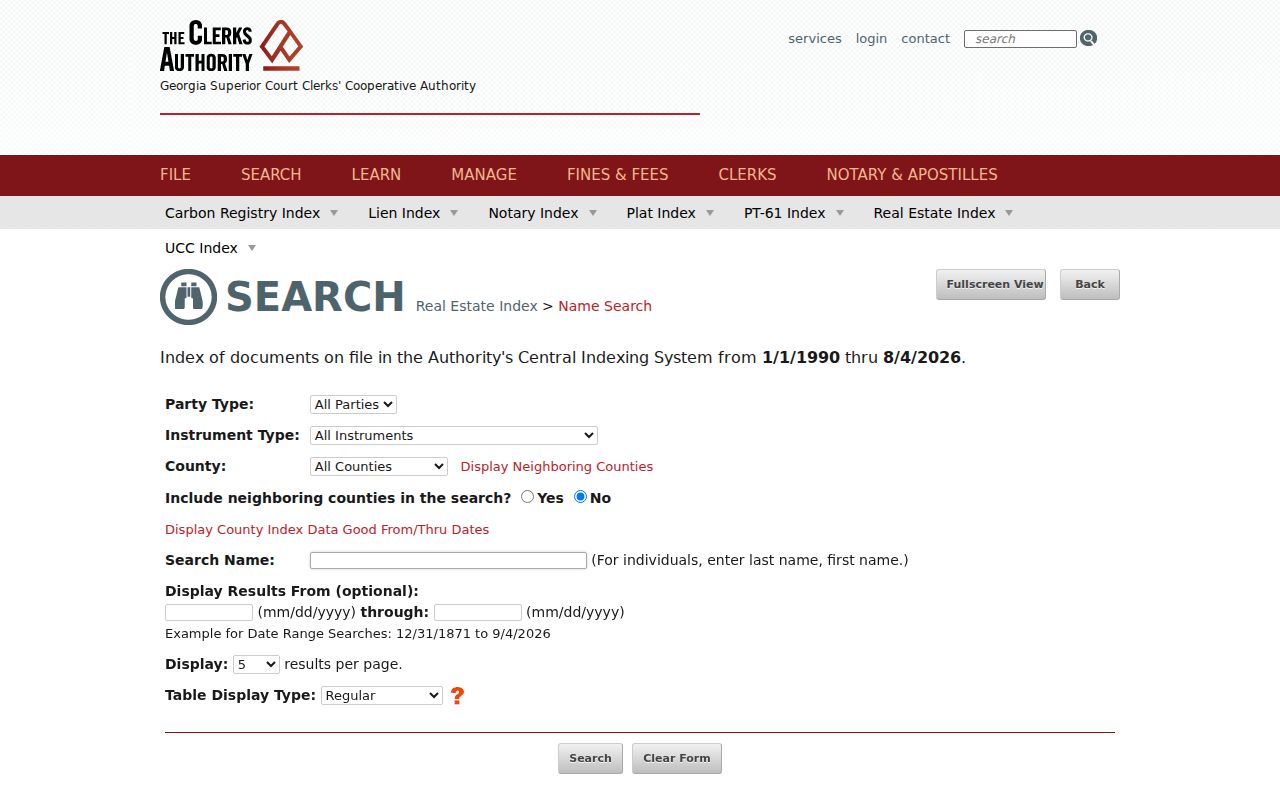
The same GSCCCA deed index narrows five ways: county, party role, spelling, date, and instrument.
Candler Parcel Cards Need Cross-Checks
Candler's qPublic landing page describes the assessor's January 1 valuation role. It also links to the parcel application. Routes there cover ownership, assessment, the map, sales history, and legal information. A sample card also lists owner mailing details and FM/Q sale-history codes. No official legend explains those codes. They can be noted, but their meaning should not be guessed.
The assessor's public landing page stays useful even when the search form is blocked.
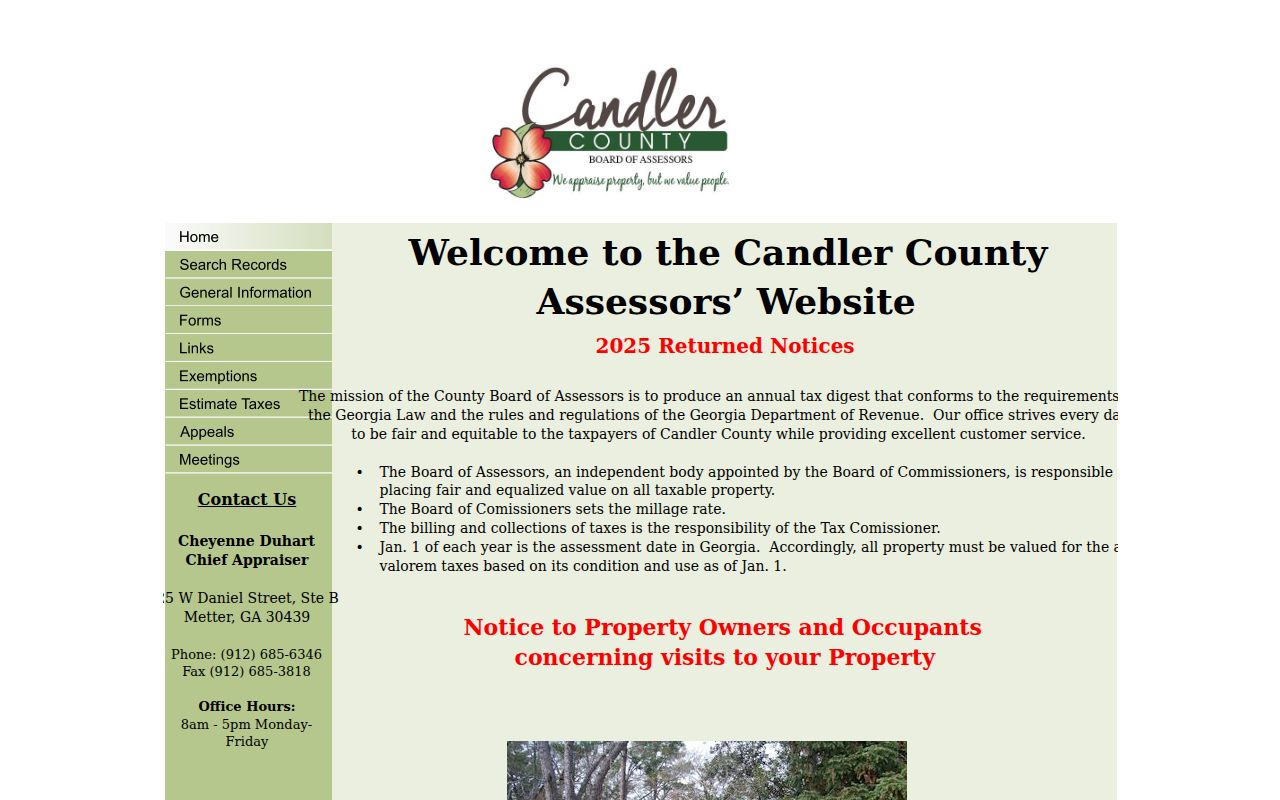
It carries office contacts, forms, appeal guidance, and the official path into the Candler parcel search.
Filing Alerts for Candler Land
Owners wanting a forward-looking check have one option. They can enroll in the voluntary GSCCCA Filing Activity Notification System. FANS sends notice when a filing matching the enrolled name enters participating GSCCCA indexes. It will not stop a deed. Nor will it validate a signature, insure title, or replace a periodic review of the land records. Each name variant, trust, or business entity needs its own entry. The FANS signup screen shows the statewide notification service sitting alongside the deed index.
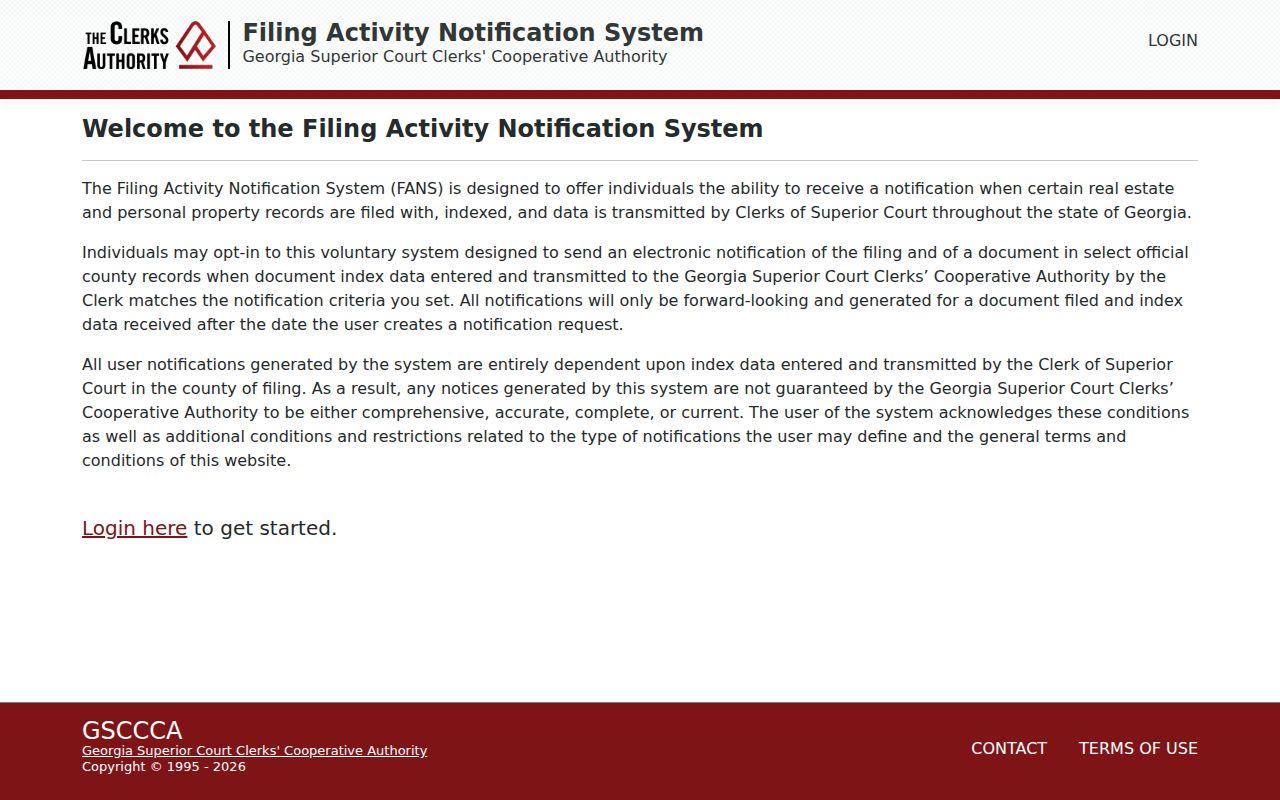
Note: Treat any alert as a prompt to inspect the actual instrument with the Candler Clerk.
Candler County Property Record Types
No single document answers every land question. A deed names the grantor and grantee and states the legal transfer. A parcel card ties the assessor's owner snapshot to physical and value fields. A bill shows tax liability and payment status. Plats depict surveyed divisions accepted for recording. Permits and zoning files document public land-use review. Court and probate files can explain a transfer that a sale-history row leaves murky.
| Record Type | What It Documents | Kept By | Access |
|---|---|---|---|
| Deeds | Transfers, parties, legal description | Superior Court Clerk | GSCCCA or clerk |
| Liens and releases | Recorded claims and later releases | Superior Court Clerk | GSCCCA lien and deed indexes |
| Assessment and tax | Fair market value, assessed value, exemptions, bills | Assessor and Tax Commissioner | qPublic and tax portal |
| Plats and parcels | Lot, block, map, and parcel reference | Clerk and assessor | GSCCCA plat index and qPublic |
| Permits and zoning | Land-use review and permitted work | Metter or Candler County | Office pages and requests |
For ownership language and the instrument chain, use Candler County deed records. Read the tax and assessment sources together when the goal is value or payment status. A plat helps interpret a lot reference, but a surveyor, not the web map, settles a disputed line.
Candler Tax Values and Bills
Two offices divide the work in Candler County. The assessor establishes fair market value and exemptions. The Tax Commissioner applies the adopted millage and collects the bill. Georgia generally assesses property at 40 percent of fair market value. One mill is a dollar per thousand of value. Special programs, including conservation or current-use treatment, can change the taxable result. Confirm the actual account instead of inferring from acreage. Candler's official pages disagree in places on due dates and delinquency math. That makes a phone call the safest last step. Save the bill, note the tax year, and call the Tax Commissioner. The GovernmentWindow property route sits behind a verification step. Its search fields resist a plain description. Treat whatever screen you reach there as worth confirming by phone.
Appealing Candler County Assessments
Value disputes go to the Board of Assessors, not the Tax Commissioner. The appeal window is short. Georgia's PT-311A framework gives 45 days from the assessment notice to file. Homestead applications have their own April 1 deadline. The dates serve different tasks: one contests a value, the other claims an exemption for an eligible home. Keep the notice, parcel card, photos, and sales evidence. A dated appeal copy belongs with them. The Georgia Department of Revenue valuation overview explains fair market value and the 40 percent assessment framework, and county staff can confirm the local filing method and whether a form was received.
Metter Adds Permit Records
Metter keeps a city records layer. Its building and zoning office handles permits, inspections, zoning, subdivision plats, E-911 addresses, rezoning, and development-plan review. Plat proof runs on two tracks. A final plat also reaches the Clerk's records. Municipal approval and county recording are separate proof points, and the Metter building and zoning page identifies the city process and its office contacts.
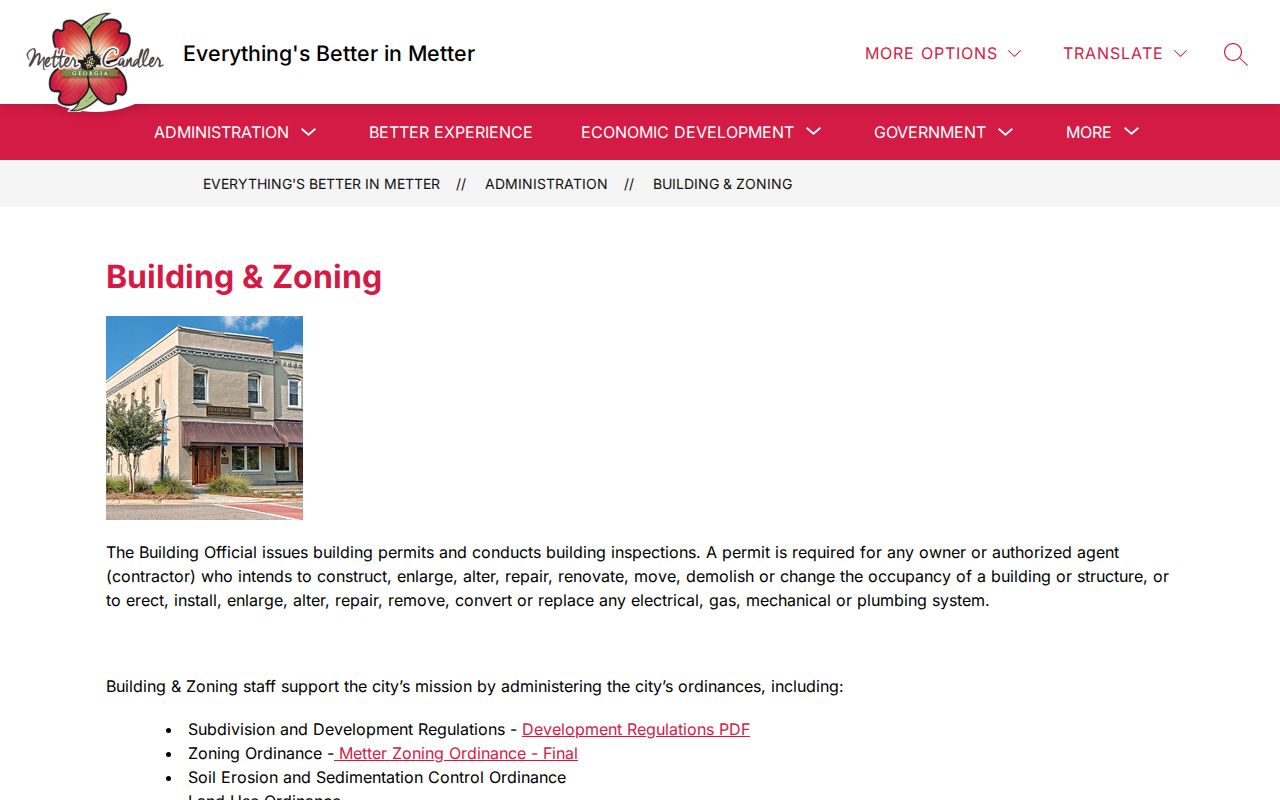
For land outside Metter, use Candler County's zoning, subdivision, road-naming, and property-numbering materials instead.
Pulaski Records Need a Boundary Check
Pulaski is Candler County's other incorporated town and uses ZIP 30451, but neither a ZIP label nor a mailing city proves that land lies inside its limits. No verified Pulaski municipal permit or zoning portal was located. Begin with the county parcel, then determine the situs jurisdiction and ask whether the county or town held the approval. County planning materials reported no Pulaski zoning or building ordinance at the time of the late-2024 hazard-plan context, so current status deserves a direct check.
For either city, an official street address is only one search key. Candler County maintains road naming and property numbering, Metter assigns E-911 addresses, USPS uses delivery labels, and deeds use legal descriptions. When an address fails, try the owner name, road variant, parcel identifier, lot and block, and deed citation.
Candler Land Before 1914
Candler County was created in 1914 from Bulloch, Emanuel, and Tattnall counties. That date shapes every old title search. A chain predating formation may continue in a predecessor county's books rather than an early Candler volume. Metter was founded in 1889 and incorporated in 1903. It became the county seat at formation. The current courthouse dates to 1921. For deeper work, pair the Clerk's books with the Georgia Archives tax collection, the state property-documentation guide, FamilySearch's cataloged 1994 local history, the L.C. Anderson Memorial Library, and the Candler County Historical Society museum. The Archives' county-card finding aid leans toward pre-1900 counties. A missing card proves nothing about what existed.
- Grantor
- The party transferring an interest.
- Grantee
- The party receiving it.
- Parcel
- A tax and map unit identified by the assessor.
- Plat
- A recorded drawing of lots, boundaries, or a subdivision.
Current Candler County Record Changes
A county notice posted August 26, 2026 proposed a 13.294-mill rate. That is up 2.751 mills, or 26.09 percent. Hearings were set for September 9 and September 21. A proposal is not a final rate. Confirm the adopted millage and the final bill before relying on either in a calculation. Candler's 2024 zoning package is unusually specific. It includes a zoning map, subdivision rules, provisions for manufactured homes, tiny homes, and RV parks, road naming and property numbering, and a fee schedule. Those records can explain land-use limits that never appear on a deed or tax card.
Requesting Offline Candler Records
Georgia's Open Records Act sets a three business day window for a response. But the response itself may not deliver the records. The county's open-records page routes Board of Commissioners files. It also points requesters toward the true custodian for assessor, tax, clerk, sheriff, or probate records. A custodian must hand over existing public records, subject to lawful redaction. But no office has to build a new parcel-to-owner report for you.
Name what already exists. Dates, a parcel number, an owner of record, book and page, a permit number, or an account year. Any of these will do the work. Ask for electronic copies when practical, and get a cost estimate before authorizing a broad search. Route each item to the right office. Certified deeds go to the Clerk. Parcel cards go to the assessor. Paid tax bills go to the Tax Commissioner. Older local history may mean an appointment at the museum. Or it may mean a holdings check with the library.
Keep a short evidence log when a portal comes back empty. Record the date, the search terms, filters, spelling and road variants, and any access error. Then ask the harder questions. Is the item too new to index? Is it sitting in a book or an office terminal? Could it be filed under a former owner, or held by a predecessor county? That log separates "no online result" from "no public record." The two are not the same conclusion.
Precision also protects context worth having. Request the existing index entry, image, card, map, permit, or ledger rather than a custom title report. Include both the situs and mailing addresses when they differ. For a parcel inside Metter, name the city approval involved. If it sits near Pulaski, ask which jurisdiction held the file on the action date. Save each office response beside the deed, appraisal, and tax-year evidence. This dated trail makes later Candler County property records far easier to reconcile.
Limits of Candler County Property Records
Candler County property records capture public acts and government data. Recorded transfers and assessed values live there. So do tax accounts, plats, liens, releases, court filings, and permits. They cannot guarantee clear title. They cannot fix a boundary on the ground. Nor can they prove every improvement was permitted, or predict what a buyer will pay. A current parcel card can lag behind a recent deed. A tax account may still carry an older name. That can happen during an estate, foreclosure, or entity change.
Privacy rules shape the picture too. Georgia Safe at Home and VoteSafe can shield qualifying addresses. Vital records carry eligibility limits. Court files may also be sealed or redacted. A missing address may reflect a lawful safeguard rather than a poor search. Respect those limits. Use the disclosed records only for legitimate property research.
Lawful use. Candler County records support due diligence, boundary work, estate research, and civic review. They must not be used to stalk, harass, or harm anyone.